
In new energy storage systems, equipment such as battery compartments and power conversion systems, due to their high energy density and dense power electronic components, are prone to arc flash short-circuit faults, which can easily lead to thermal runaway, equipment damage, and even fires, seriously threatening system safety. The arc flash protection system solution for new energy storage projects addresses the specific characteristics of energy storage scenarios, building a precise and rapid arc flash fault defense system.
Components of the Arc Flash Protection System for New Energy Storage Systems
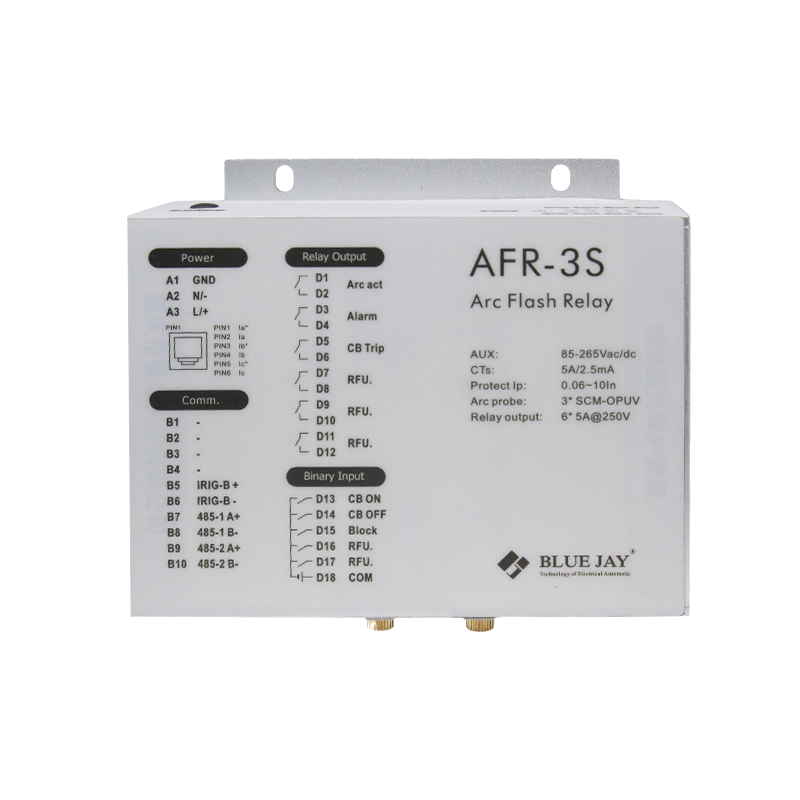
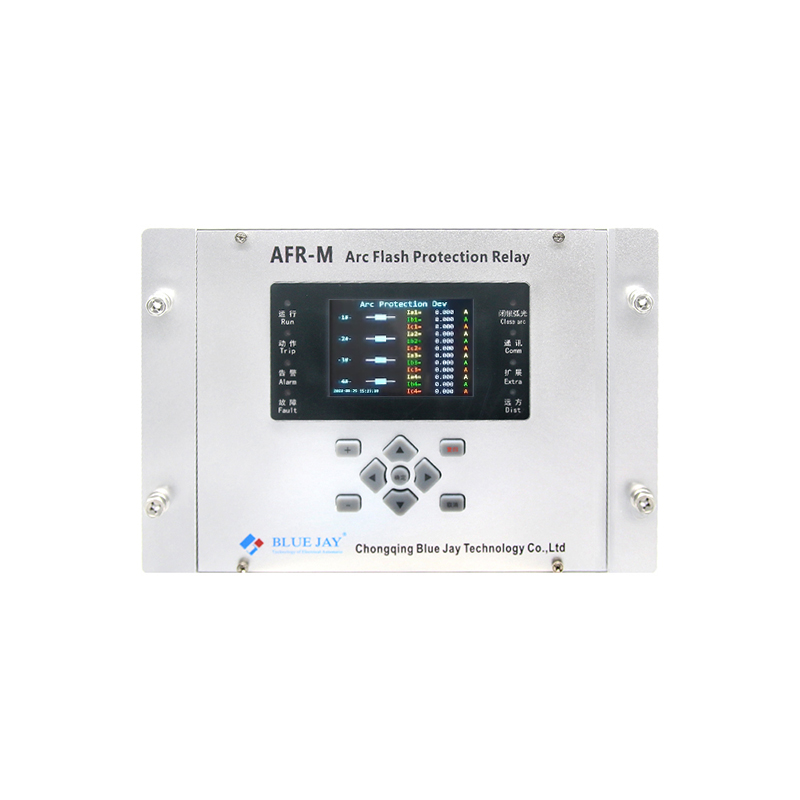
Arc Flash Protection Relay: Utilizes multi-channel protection relays of model AFR-M or AFR-3s, performing the core functions of signal acquisition, logic calculation, and trip command output.
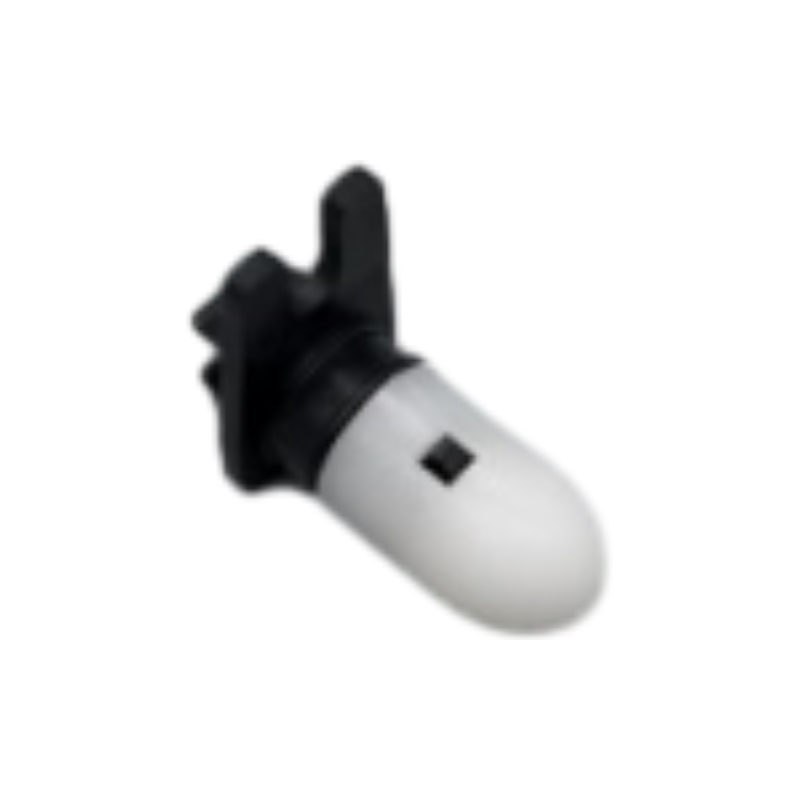
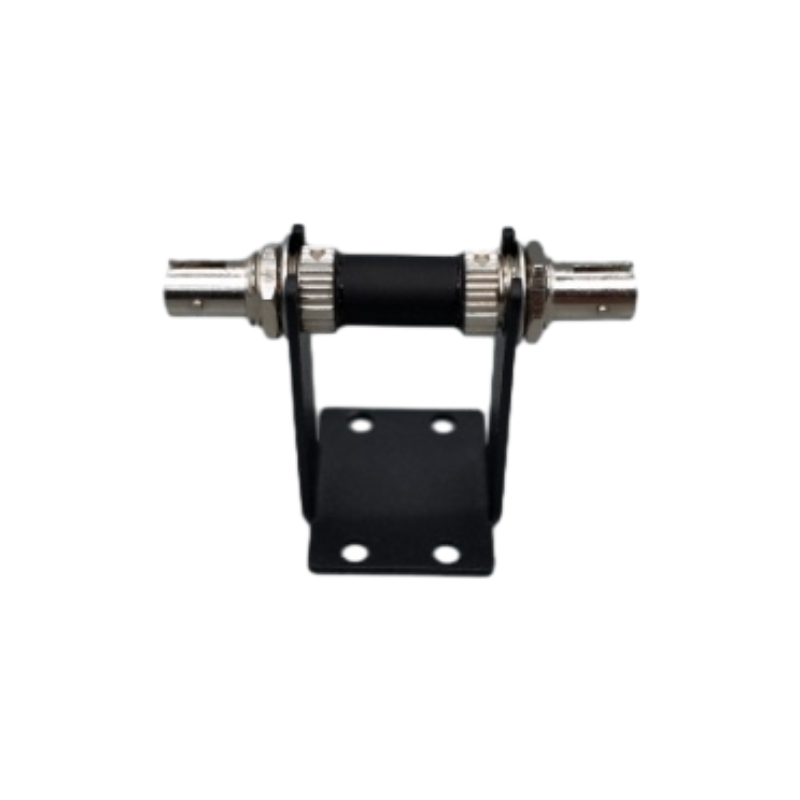
Arc Flash Sensors: Multiple sensors can be configured in the battery compartment, junction box, and power conversion unit (PCU), possessing high sensitivity for capturing arc flash signals and providing real-time optical signal data for fault determination.
New Energy Storage System Arc Flash Monitoring Areas
The arc flash protection scheme needs to cover three key areas of the energy storage system to achieve comprehensive monitoring:
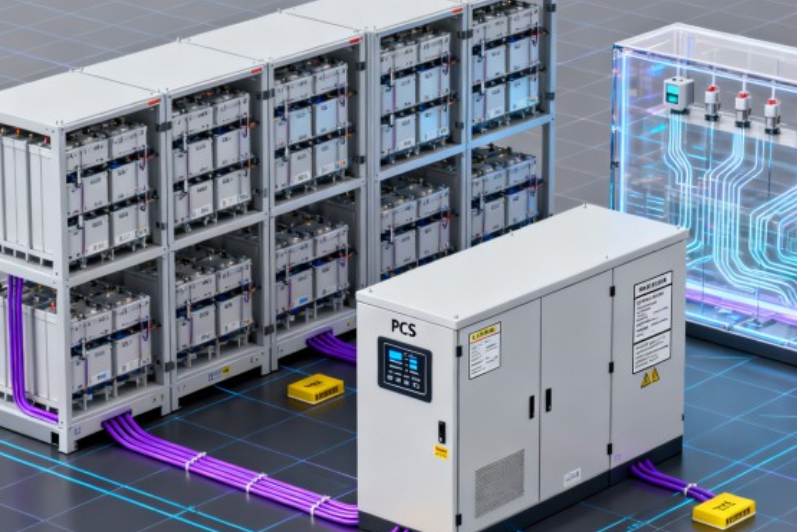
Battery Compartment: The battery cluster is the core of energy storage, and arc flash faults can easily trigger a chain reaction of thermal runaway in the batteries. Monitoring this area is crucial for preventing large-scale failures.
PCS (Power Conversion System): As the core equipment for AC/DC conversion, insulation failures of power electronic devices can easily cause arc flashes, directly affecting power conversion and output.
Combiner Box: It performs power conversion and distribution functions, and internal arc flash faults can quickly affect associated circuits.
Design Logic of Arc Flash Protection Solution for New Energy Storage Systems
The new energy storage system is designed based on a dual criterion of arc flash and current, ensuring the accuracy and selectivity of fault clearing:
DC Side Logic (Battery Compartment, Inverter Fault): When an arc flash fault occurs in the battery compartment or inverter, the system determines to trip the DC side equipment. This design quickly isolates DC circuit faults, preventing the fault from spreading to energy storage units such as battery clusters.
AC Side Logic (Transformer, PCS Fault): If an arc flash fault occurs in the transformer or PCS, the system determines to trip the AC side equipment, precisely disconnecting the AC circuit fault source and ensuring the safety of the AC link between the grid side and the energy storage side.
Application of Arc Flash Protection Solution for New Energy Systems
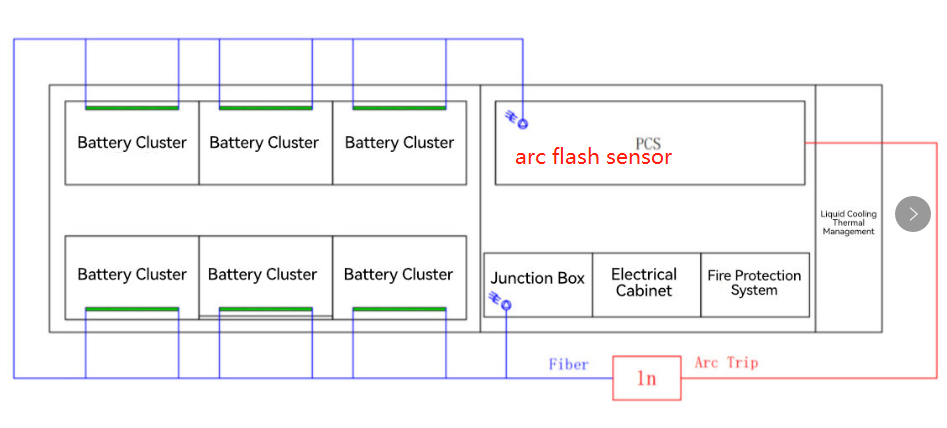
As shown in the figure above, this arc flash protection scheme covers core energy storage units such as multiple battery clusters, PCS (Power Conversion System), combiner boxes, electrical cabinets, and fire protection systems. Arc flash sensors are distributed in the battery compartment and PCS area to capture arc flash signals in real time; the main control unit is interconnected with each monitoring point through fiber optic communication to quickly analyze arc flash signals and issue tripping commands based on scenario-based logic for the DC or AC side, achieving fault clearance in milliseconds. This provides a robust arc flash fault protection barrier for new energy storage projects, enabling efficient operation of energy storage systems under safe conditions.