
What causes arc flash in ESS?
Due to the characteristics of energy storage systems, such as high voltage, high current, and tens of thousands of direct-current connection points, the risk of arc faults is increased. In ESSs, arc flash can be caused by poor contact at connection points, aging or damaged insulation materials, sudden circuit disconnections, continuous increases in DC voltage, the increasing number of batteries and electrical connections, and other factors.
What Are Arc Fault Types of ESS?
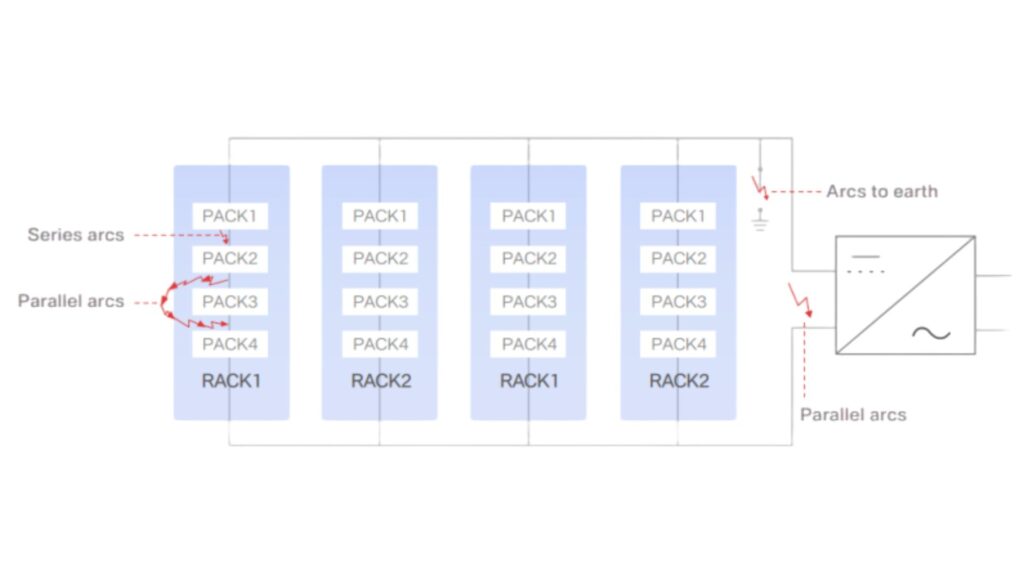
In energy storage systems, arc faults can be mainly categorized into series arc faults and parallel arc faults. Series arc faults typically occur within a single charged conductor, such as the arcing that occurs within a single conductor between battery packs in a battery rack. Due to the short distance and large number of conductors, these arcs occur frequently but produce weak signals. Parallel arc faults in ESS usually occur between different charged conductors, such as between the connecting conductors of three battery packs in the same battery rack. Additionally, ground faults in energy storage systems also belong to parallel arc faults. Due to the longer distance between conductors and the complex connections, these arcs occur less frequently.
What is ESS Arc Flash Generation Process?
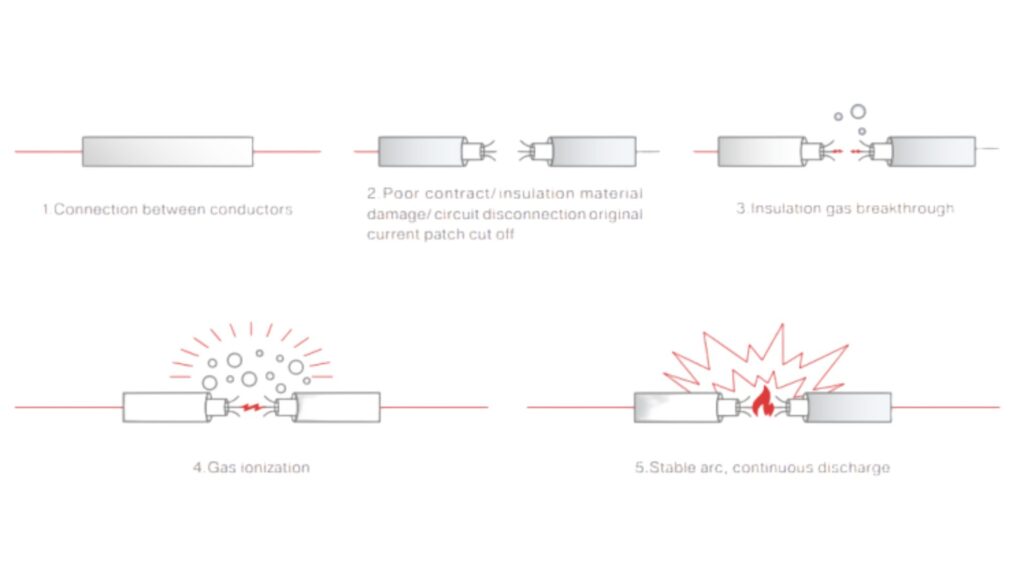
The process of series arc flash generation in energy storage systems is as follows: First, the system is in a normal conducting state with tightly connected conductors; subsequently, due to external forces or aging, the conductors experience poor contact or physical disconnection, interrupting the metal pathway; then, the high voltage at both ends of the break instantly breaks down the insulating gas in the gap, triggering gas ionization and forming a conductive plasma channel; finally, the current continuously discharges through this channel, forming a stable, sustained arc, generating thousands of degrees of high temperature and easily causing fires.
The process of parallel arc flash generation in energy storage systems is essentially a violent short-circuit discharge caused by insulation failure between the positive and negative electrodes: First, the insulation layer between the two electrodes fails due to aging carbonization, mechanical damage, or foreign object intrusion; subsequently, the system’s high voltage instantly breaks down the damaged insulating medium, establishing a conductive plasma channel; finally, due to the lack of load limitation in the circuit, a huge short-circuit current is instantly released through the arc channel, generating an explosive energy surge and thousands of degrees of high temperature, which can easily cause equipment explosion or serious electrical fires.
What are the dangers of arc flash in ESS?
Given the high voltage, high current, and multiple connection points on the DC side of energy storage systems (ESS), a DC arc discharge can instantly release enormous energy, reaching core temperatures of 3000 to 20000°C. This extreme heat rapidly propagates into the battery, directly triggering thermal runaway and releasing flammable gases, leading to serious chain reactions of fire or explosion. This not only poses a fatal threat to maintenance personnel but also causes costly equipment damage, grid instability, and significant economic losses. Therefore, effectively preventing DC arcs and the resulting thermal runaway is crucial for ensuring the safety of energy storage power plant assets and operational stability.
Arc Flash Protection Solution in ESS
Arc Flash Prevention for ESS
Arc flash caused by insulation failures is common in energy storage systems, especially in high-humidity and high-salinity environments. If you want to prevent arc flash by monitoring insulation failures, you can consider AC/DC insulation monitoring.
Arc Flash Protection for ESS
For the high-voltage parallel characteristics of energy storage systems, the core strategy of this arc protection solution lies in fault isolation and energy reduction. When an arc fault is detected in a battery pack, the system immediately disconnects that battery pack from the DC bus, thereby preventing other healthy parallel battery packs from feeding energy back to the fault point. This mechanism limits the arc energy to a single cluster level, significantly reducing the destructive potential of the accident, while allowing the remaining normal battery packs to continue supplying power or charging, maximizing the system’s business continuity.
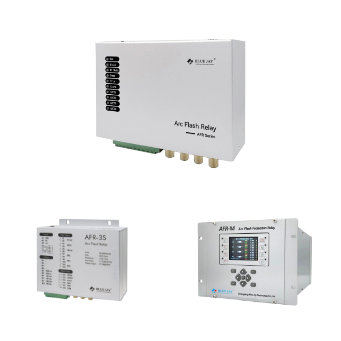
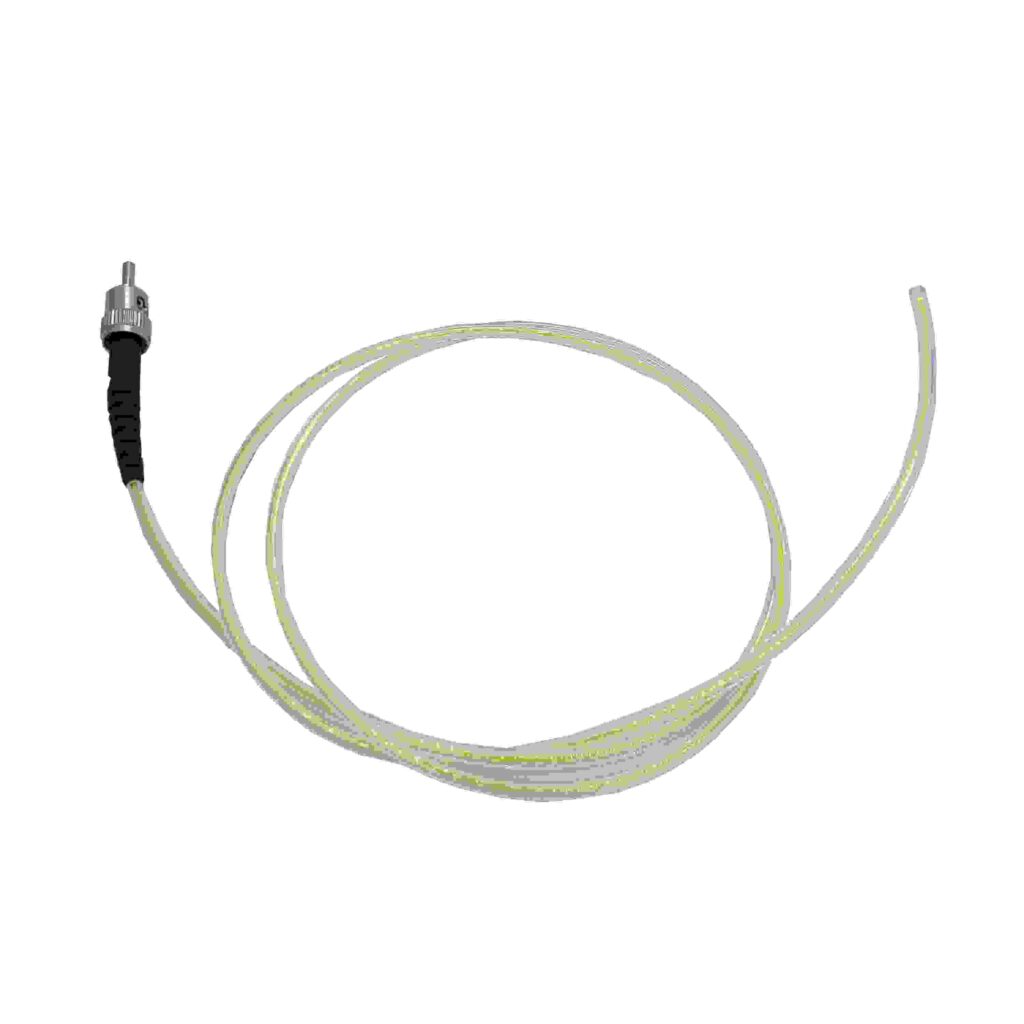
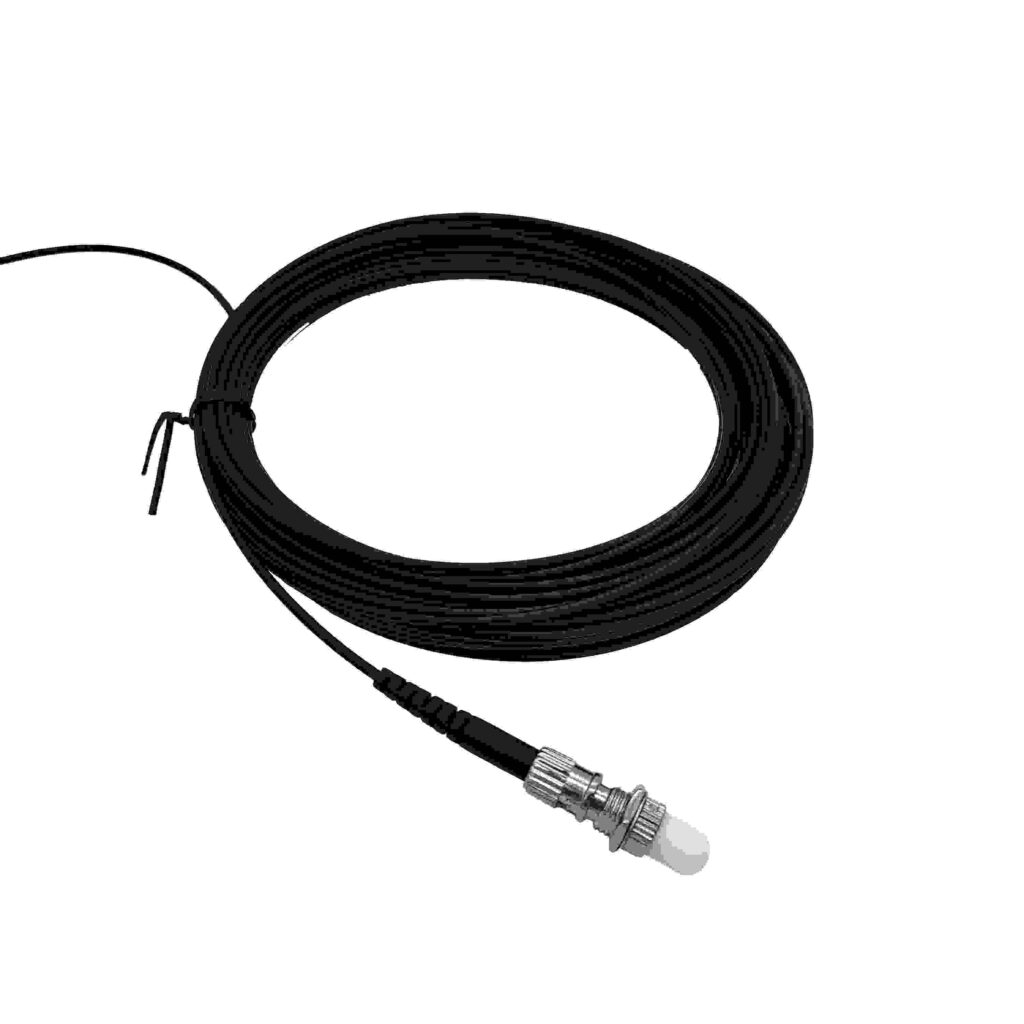
In terms of implementation, the solution requires placing optical sensors in high-risk areas such as inside the inverter cabinet and around the DC busbar, as these locations concentrate high levels of DC power and are highly susceptible to arc faults due to connector failures or ground faults. Once the optical sensor detects an arc signal, the arc flash relay system will respond in milliseconds, accurately locating and isolating the fault area, creating a complete safety barrier from the battery cluster output to the inverter input.